The Life You Can’t See From Where You’re Standing
A Sunday Dame Thought Experiment on Perspective, Possibility, and the Road Not Yet Walked
What if the life you think you’ve lost is actually teaching you where to go next?
The Spanish poet Antonio Machado wrote:
Caminante, no hay camino, se hace camino al andar.
Traveler, there is no path.
The path is made by walking.
We spend so much of our lives waiting for a sign that we’re headed in the right direction. We want to know the money will work out, the decision won’t backfire, and the life on the other side will be better than the one we’re leaving behind.
We want to see the road before we’re willing to take the first step.
But what if the road only becomes visible after we begin walking?
What if the future you’re waiting to see is impossible to imagine from where you’re standing today?
I know something about that.
The Night I Decided
Two decades of loss. Betrayal. Even a federal raid.
At fifty-nine, I found myself waiting tables in Florida, exhausted by a life that no longer felt like my own.
One night, somewhere between the demands of the restaurant and the weight of everything I’d carried for years, I reached my limit.
Enough.
I went to Bali to save my life. And I mean that literally.
I rented out my house to cover the mortgage and bills. I used airline points to get there. I had no grand plan, no guarantee that anything would change, and no idea what I would find when I arrived.
I knew only that I couldn’t keep living the way I was.
I needed healing. I needed a different perspective. I needed to believe there was more to my life than the circumstances I could see in front of me.
I couldn’t have imagined that decision would lead to A Waitress Goes to Bali, the book I never expected to write, or Claim Your Dame, the business I’m building today.
None of that existed in my mind on that night in the restaurant.
There was only the life I was living, the life I could no longer bear, and a decision to find out what else might be possible.
Looking back, I see something I couldn’t see then:
I was waiting for my life to change before I could believe in a different future. Instead, I had to change something before I could discover what that future might be.
I didn’t know where the road led.
I walked anyway.
The Story You’re Telling Yourself May Not Be the Whole Story
Here’s something we don’t always recognize: we don’t just experience our lives. We interpret them.
A relationship ends, and we decide we’re not enough.
A business fails, and we decide we’re not capable.
A dream slips away, and we decide we’ve missed our chance.
We take something that happened to us and turn it into a verdict on who we are.
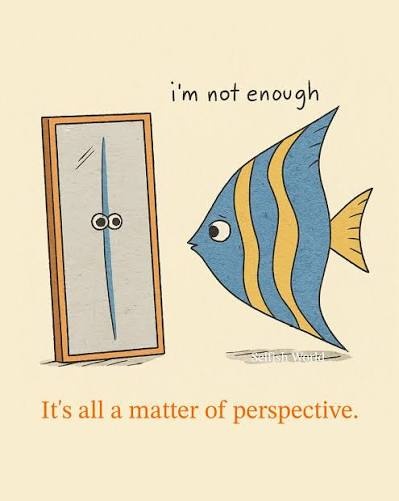
But what happened is a fact. What you decide it means about you is a story.
The distinction matters.
A painful relationship does not make you unworthy of love. A mistake does not mean you can never trust yourself again. A lost opportunity does not prove that every opportunity worth having has passed you by.
Yet once we accept these conclusions as truth, they begin to dictate our choices. We stop applying, stop creating, stop reaching out, stop imagining. Sometimes we close doors that haven’t even been opened because we’ve already decided what’s on the other side.
And the longer we repeat a story, the harder it becomes to recognize that we wrote it ourselves.
This doesn’t mean pretending that painful experiences weren’t painful or that every setback is secretly a blessing. Some things are losses. Some things are unfair. Some things change us in ways we never wanted.
But even when we cannot change what happened, we can question whether the meaning we’ve assigned to it deserves to govern the rest of our lives.
What if the thing you believe disqualifies you is actually just one part of your story?
What if you’re not a failure, but a woman who experienced failure?
What if you’re not too old, but a woman who has finally accumulated enough experience to know what matters?
What if you’re not starting from nothing, but from a place you haven’t yet learned how to use?
That brings us to something else worth considering.
You May Be Starting From Everything You’ve Learned
For years, my life looked like a collection of unrelated pursuits.
I waited tables. I coached horseback riders. I pursued creative ideas, built businesses, designed logos and websites, and developed inventions.
At the time, I couldn’t always see how these pieces fit together.
Now I can.
Waitressing taught me to read a room, anticipate needs, and manage competing demands without losing sight of the bigger picture.
Teaching and coaching taught me to observe what others might miss, anticipate what could happen next, and understand how one decision affects the next. I learned to see the whole picture unfolding in my mind and help riders understand not just what to do, but why it mattered.
My creative pursuits taught me to imagine something that didn’t exist and work out how to bring it to life.
Different experiences. Different settings. But running through them was a common thread: I could see connections, recognize possibilities, and figure out how to move from an idea to something real.
I hadn’t wasted those years. I’d been developing skills I didn’t yet know how I would use.
The difficult years taught me something, too. I learned about endurance, reassessing my circumstances, and beginning again when the life I’d expected was no longer available to me.
I wouldn’t choose every experience a second time. But I can choose what I carry forward.
Perhaps you have a similar collection of experiences.
The career you left may have taught you how to manage people, solve problems, or recognize opportunities. The years you spent caring for others may have developed strengths you now take for granted. The dream that didn’t work out may have shown you what you truly want—or what you no longer want.
You may be measuring your life by the things you didn’t accomplish while overlooking everything you learned along the way.
You may not need to become an entirely different woman. You may need to recognize what the woman you’ve already become can do.
Your Wreckage Is Not the Whole Story
There is a particular kind of accounting many women begin doing as they approach their fifties, sixties, and beyond.
We count the years we spent caring for others. The opportunities we missed. The dreams we postponed. The parts of ourselves we set aside because someone else needed us.
We compare the lives we have with the lives we once imagined, and sometimes the difference hurts.
We wonder whether we’ve waited too long, given too much away, or made too many wrong turns to build something different now.
But consider what happens when you measure an entire life against a single standard: the career you thought you’d have, the relationship you thought would last, the financial security you thought you’d achieve, or the person you thought you’d become by a certain age.
Everything that doesn’t match that picture begins to look like evidence against you.
And you can spend years punishing yourself for not having a life that never actually happened.
Your wreckage is not proof that your life went wrong. It is part of the material you have to work with now.
You can grieve what you lost without surrendering what remains. You can acknowledge the woman you were, respect what she survived, and still give yourself permission to want something different.
You are not obligated to keep living according to decisions made by a younger version of yourself.
You are allowed to reconsider. To redirect. To begin something you once thought was beyond your reach.
Your past helped shape you. It deserves a place in your story.
It does not deserve ownership of the ending.
Step Back. Look Again.
Imagine standing ten feet away from a difficult situation. Every mistake, every disappointment, every unanswered question fills your field of vision.
It’s hard to see anything else.
Now imagine looking at that same situation from ten thousand feet above. The details become smaller. You can see the surrounding landscape, the obstacles you hadn’t noticed, and routes that weren’t visible from the ground.
The situation may not have changed.
But your understanding of it might.
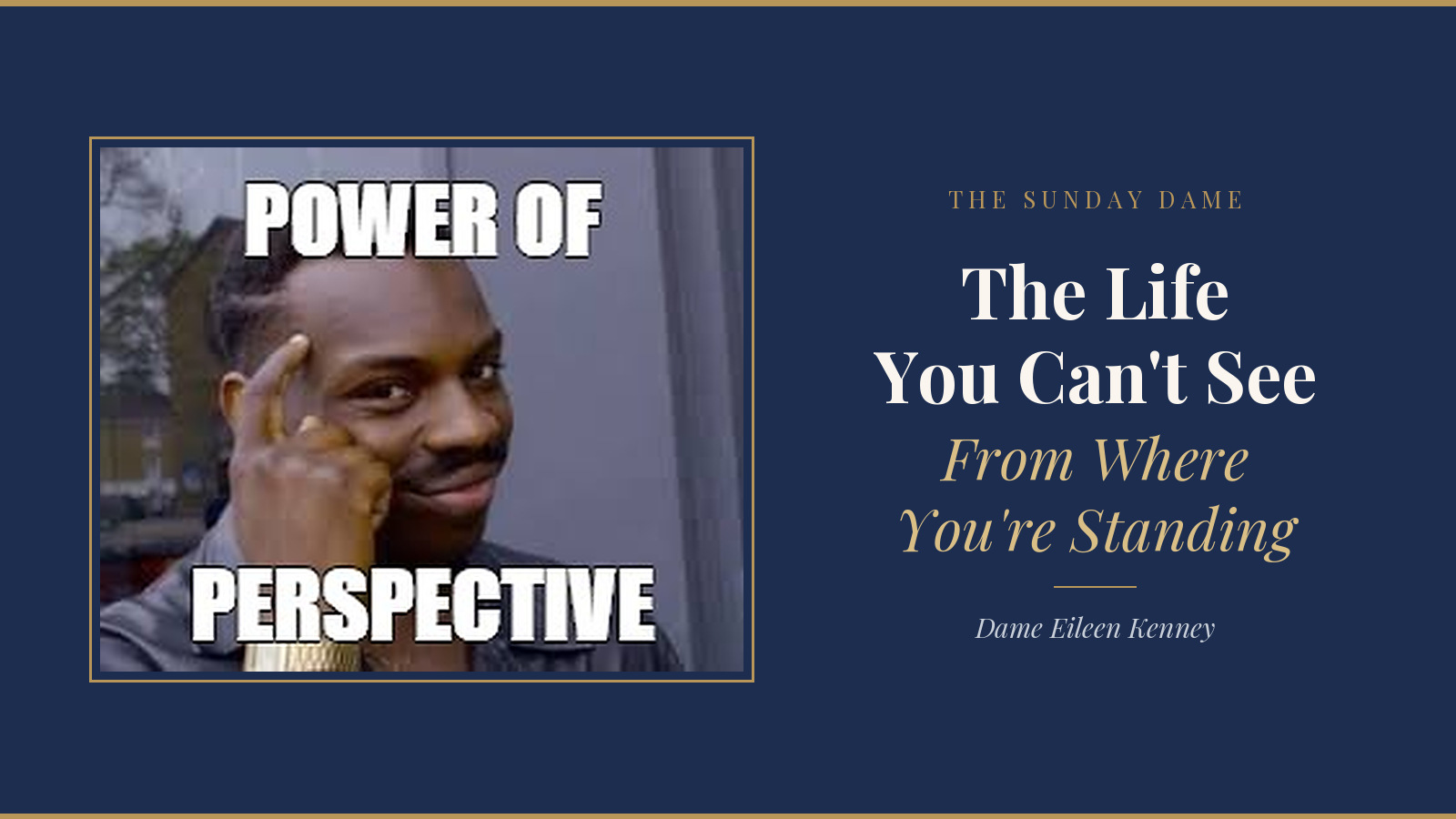
This is the power of perspective. It allows you to separate what happened from what you fear it means, distinguish what you cannot control from what you still can, and recognize possibilities that become invisible when you’re too close to the problem.
Sometimes, the most useful question isn’t How do I fix this?
It’s What else might be true?
Perhaps the career you think you’ve failed at has shown you what you’re good at—and what you never want to do again.
Perhaps the relationship that ended has revealed how much of yourself you had been willing to abandon to keep it.
Perhaps the dream you thought you missed is no longer the dream you want.
Perhaps you’re not afraid because you’re incapable. Perhaps you’re afraid because you’re standing at the edge of something unfamiliar, and you can’t yet see how it will turn out.
You don’t have to force a positive interpretation onto everything you’ve experienced. You don’t have to call every hardship a gift.
You only have to leave room for the possibility that your current view of your life is not the only view available to you.
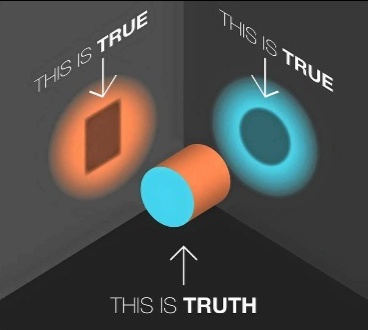
And that possibility can change what you do next.
You cannot rewrite every decision or undo every loss. But you can reconsider what those experiences mean, recognize what you’ve learned, and stop treating your past as a prediction of your future.
You are not too old. You are not too broken. It is not too late.
Before you decide that your best days are behind you, consider this:
What if the life you want isn’t as far out of reach as you believe? What if the first thing that needs to change isn’t your circumstances, but the way you’re seeing them?
You don’t need to have the answers. You need to be willing to ask different questions.
And that’s where this week’s thought experiment begins.
The Sunday Dame Thought Experiment
Think of one thing in your life that feels stuck.
A relationship. A career decision. A financial worry. A disappointment. A dream you’ve quietly set aside.
Don’t try to fix it just yet. Instead, imagine looking at it from three different distances.
Ten feet away: What is actually happening?
What do you know for certain? What are you assuming?
Ten thousand feet above: What might I be missing?
If someone you cared about were facing the same situation, what possibilities might you see for her?
Ten years from now: What might I wish I’d done today?
What might you wish you’d had the courage to begin, or let go of?
Don’t censor your answers or demand immediate solutions. Ponder them all week, and give yourself room to consider possibilities you may have dismissed too quickly.
Then ask yourself one final question:
What is one thing I can do this week that my current perspective has been keeping me from doing?
Make the call. Research the opportunity. Start the application. Set the boundary. Take the first small step toward the dream you’ve been telling yourself is no longer possible.
It doesn’t have to change your entire life. It only has to move you beyond where you are standing today.
You don’t need a map for a road that hasn’t been made.
You need to be willing to take the first step.
— Dame Eileen Kenney
Sunday Dame Thought Experiment | Claim Your Dame
GET YOUR LIFE BACK.
Also on The Sunday Dame: Frake This! · The Surge · Keep the People in the Boat