The World Tells Older Women to Go Quietly. Nature Knows Better.
The wolf, the whale, and the elephant know something we have forgotten: a female’s value does not diminish with age. Sometimes, that is when she becomes indispensable.
The wolf who refused the rules
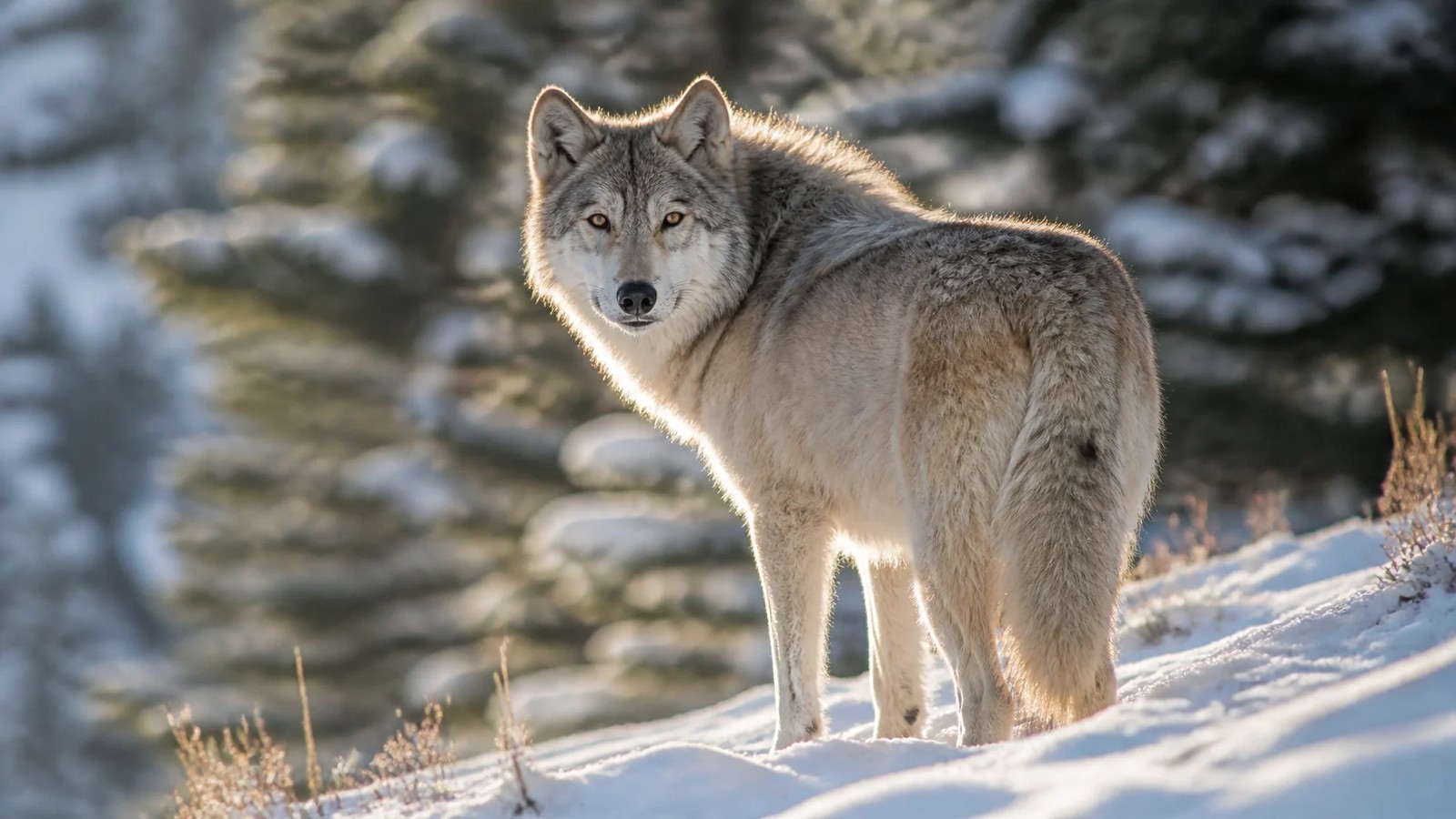
She was the wolf who refused to follow the rules.
While other wolves sought mates and built packs, she hunted alone. While males came courting, she turned them away. And when she finally built a family, she did it in a way that astonished the people studying her.
They called her the 06 Female.
Born in Yellowstone’s Lamar Valley in 2006, she came from one of the park’s celebrated wolf lineages. But it was her extraordinary independence that made her a legend.
There’s a reason lone wolves are so rare. Life is hard for a wolf even inside a pack. Biologists say bringing down an elk normally takes about four wolves working together, and even with a full team, many hunts fail. One well-placed kick from an elk can kill a wolf.
The 06 Female did the whole job herself. Not once, but again and again, according to Doug Smith, longtime leader of the park’s wolf project. She weighed about a hundred pounds. A grown bull elk can weigh five to seven times that. Once, shortly after giving birth, she slipped away from the den and brought down two elk in about ten minutes.
All by herself.
Even her method broke the rules. Most wolves try to chase an elk down to exhaustion. She preferred a standoff: face-to-face combat with an animal that would rear up and trample her under its hooves or gore her to death.
She would put herself in the most dangerous position, then dodge the elk’s attack with astonishing agility. When the moment came, she would launch herself directly at the animal, leap into the air, turn her jaws sideways, and seize its throat.
No sensible wolf would choose such a dangerous strategy. One mistake could be fatal. Yet she repeatedly pulled it off.
Rick McIntyre, who spent years observing Yellowstone’s wolves, called her the Angelina Jolie of wolves.
She did not simply reject the expected path. She found another one.
Eventually, she established the Lamar Canyon Pack with a pair of younger brothers from another pack, then raised pups and helped teach her inexperienced mates how to survive. Her independence had not made her incapable of belonging to a family. It had made her a different kind of leader.
In December 2012, she crossed the boundary of Yellowstone National Park. Outside its protection, a hunter shot her. Wyoming’s resident wolf-hunting license cost $18.
Inside the park, she was a legend. Outside it, she was worth eighteen dollars.
Hold on to that.
The women we stop seeing
The wolf’s story is a brutal reminder of how quickly a life of extraordinary value can be reduced to a number. But there is another, quieter way we diminish lives: we decide that their most important years are behind them.
I watched that happen to my mother.
She raised six children on a tight budget while caring for her own ill mother, who lived with us until she died. My mother stretched the milk with powdered milk. We kids pasted S&H Green Stamps into booklets. She worked midnight shifts to keep the family going.
For years, there was always someone who needed her. Six children. Her own mother. A household to hold together. A thousand things that had to be done, whether she was tired or not.
Then the children grew up and started lives of their own. Her mother was gone. My father died.
The people she had spent a lifetime caring for were no longer there. And my mother was left alone with the question that can arrive when a woman’s duties finally fall away: What now?
In her late sixties, she tried to find work in a flower shop. She had a gift for floral arrangements and interior design.
They thought she was too old.
I still wonder what might have happened if someone had looked at her talent instead of her age. If someone had given her a chance to use what she knew, rather than quietly deciding that her chance had passed.
And this is where I call bullshit.
We spend decades relying on women to keep families, workplaces, and entire communities functioning. We depend on their judgment, their stamina, their ability to anticipate trouble before anyone else sees it coming. We expect them to adapt, sacrifice, endure, and figure it out.
Then, when the children are grown and the caregiving ends, we act as if the woman herself has reached the end of her usefulness.
What kind of arithmetic is that?
The same experience that made her indispensable yesterday is suddenly dismissed as irrelevant today. Her skills haven’t necessarily disappeared. Her capacity to learn hasn’t expired. Her desire to contribute, create, explore, or begin again may be stronger than ever.
But the invitations stop coming. The assumptions set in. The world starts treating her future like a shrinking room.
And too many women begin to believe the verdict.
Not because they have nothing left to offer, but because they have spent so long being told—directly or indirectly—that their time is up.
Who benefits when a woman believes that?
What the older females know
Only a handful of animals on Earth go through menopause: humans and five species of toothed whales, including killer whales. For decades, scientists asked why. What purpose could an older female serve if she could no longer have young of her own?
The orcas offer one answer.
Off the coasts of Washington and British Columbia, researchers have followed orca families for decades. Older females guide their pods toward food, drawing on knowledge of where salmon can be found and how to survive when supplies run low.
Their value becomes especially apparent in difficult years. Research has found that when a grandmother orca dies, the risk of death among her grandcalves rises sharply—particularly when salmon are scarce. One study found that grandcalves whose maternal grandmother had recently died faced a mortality hazard 4.5 times higher under the study’s average-salmon conditions.
Think about that.
The older female may no longer produce calves of her own. But the knowledge she has accumulated over a lifetime can help keep the next generation alive.
She is not a relic of the past. She is part of the reason the next generation has a future.
Elephants offer another example.
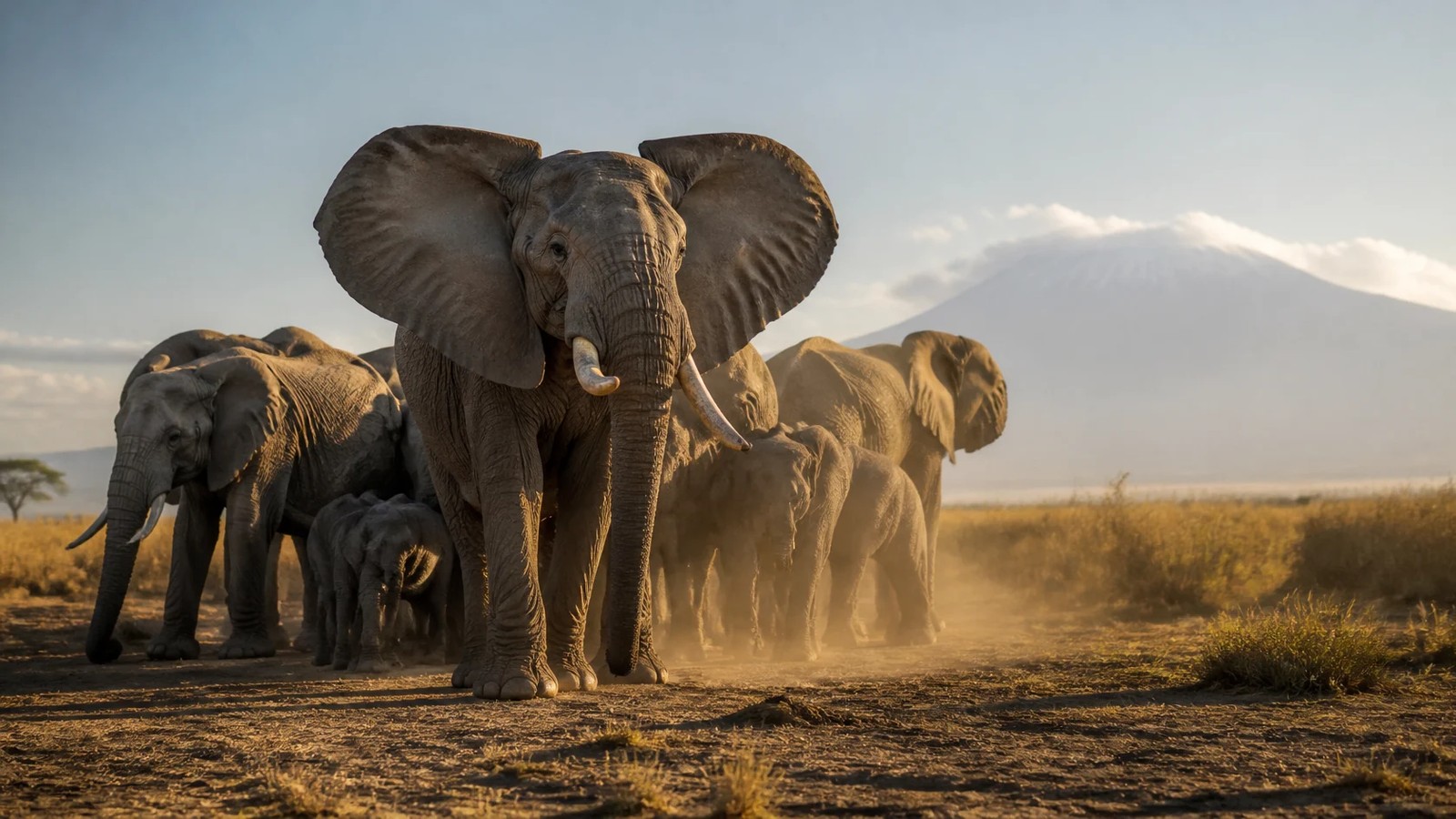
In Kenya’s Amboseli National Park, researchers played recordings of lion roars to 39 elephant families. Older matriarchs were better at recognizing the particular danger posed by male lions. Their experience helped them distinguish a serious threat that younger leaders were less adept at assessing.
And when they recognized it, they didn’t simply run. The elephants drew together into defensive groups, and families with older matriarchs were more likely to approach the source of male lion roars—a response consistent with confronting a threat.
That is the result of her uniqueness: not just recognizing danger, but knowing what to do about it—and bringing the others together to face it.
Her value was not that she could do everything a younger elephant could do. It was that she knew things the younger elephant did not.
We recognize this in other areas of life. We seek experienced doctors, seasoned pilots, veteran negotiators, and leaders who have weathered a crisis before.
Yet when women age, experience can become strangely invisible. The very years that deepen their judgment are too often treated as evidence that their usefulness is expiring.
Nature did not make older females indispensable by accident. In some species, the survival of the family depends on what they know.
Why have we decided we no longer need to learn from ours?
The day women stopped
On October 24, 1975, approximately 90 percent of Iceland’s women took the day off.
They left their paid jobs. They also stopped cooking, cleaning, and caring for children. They called it a day off, a name that helped unite women across different backgrounds around a shared demand: recognize the value of their work.
The effects were immediate. Schools and childcare centers closed. Businesses struggled to operate. Fathers brought their children to work. In Reykjavík, an estimated 25,000 people gathered to demonstrate.
For one day, a country had to confront what happened when women withdrew the labor everyone had come to take for granted.
The day became a landmark in Iceland’s movement for gender equality. It did not solve everything, and change did not happen overnight. But it made an invisible contribution impossible to ignore.
Now picture it here.
Women are nearly half of everyone working in America. They’re almost 9 in 10 registered nurses, 9 in 10 nursing assistants, 87 percent of home health aides, and more than three of every four public school teachers. And that’s only the paid work. Unpaid family caregiving in this country was valued at about $1 trillion in 2024.
If every woman in America took one day off, hospitals would be short nearly nine out of ten registered nurses by the morning shift. Most classrooms would have no teacher. Somebody’s mother would wait all day for the aide who helps her out of bed. Dinner wouldn’t make itself.
The country wouldn’t fall apart in a week. It would feel it by lunch.
That’s not a threat. It’s a measurement. It’s how much the world rests on us.
And yet women can spend a lifetime being indispensable to everyone around them and still reach an age when society begins treating them as though their most important contributions are over.
The 06 Female was worth eighteen dollars on paper and everything to her pack.
How many women are living that same arithmetic?
We are not finished
I am not suggesting that every woman wants to lead a pack, start a business, travel the world, or reinvent herself at sixty. Some want rest. Some want quiet. Some are happy with the lives they have built.
The point is that the choice should be theirs.
A woman should not have to prove that she is still productive, attractive, useful, or needed by somebody else to justify the space she occupies in the world.
And she should not have to wait for society to rediscover her value before she begins to recognize it herself.
My mother had gifts the world never properly made room for. I cannot know what her life might have become if someone had encouraged her, helped her find an opportunity, or reminded her that she was still allowed to want something for herself.
But I know this: her story should not be the story we accept for women everywhere.
The older female is not a failed version of her younger self. She is a person with a lifetime of experience, instincts, abilities, and possibilities that are uniquely her own.
Perhaps that is what the wolf, the orca, and the elephant have to teach us. Not that every older female must lead, or that nature offers a simple blueprint for human life. But that age does not erase value—and that a society which stops seeing its older women may be throwing away precisely the knowledge it most needs.
We cannot change what happened to my mother. We cannot bring back the 06 Female.
But we can change what happens next.
We can stop assuming that a woman’s most interesting years are behind her. We can make room for the dreams she postponed, the talents she set aside, and the version of herself she may have lost sight of while taking care of everyone else.
And we can help one another find our way back in our second act.
Your Sunday thought
This week, imagine a day that belongs entirely to you. Not a day spent catching up, serving someone else, or proving your worth.
A day to ask yourself what you want now—not what you wanted at twenty, or what your family needs, or what the world expects of a woman your age.
What would you do if you no longer believed you were running out of time?
You don’t need to write down the answer. Just let the question follow you through the week.
The 06 Female built a life that defied expectations. The orca grandmother leads when the salmon run low. The elephant matriarch recognizes danger because she has lived long enough to know what it sounds like.
And you?
Who told you to go quietly, and why did you listen?
— Dame Eileen
Also on The Sunday Dame: Why Didn’t I Think of That? · The Life You Can’t See From Where You’re Standing · Frake This! · The Surge · Keep the People in the Boat